Last Updated: November 2, 2026
Quick Summary
A Federal Pacific panel is considered a serious risk by many electricians because its Stab-Lok breakers may fail to trip under overload or short-circuit conditions, which can let wiring overheat and raise fire risk. A panel can look normal with no visible damage even when its breakers are unreliable, so a visual check alone can’t confirm safety. A licensed electrician should test your specific panel to judge whether it is safe.
- Federal Pacific panels were widely installed for decades, mainly from the 1950s through the 1980s.
- The concern centers on Stab-Lok breakers that may not trip under overload or short-circuit conditions.
- Look for the Federal Pacific name on the panel label and Stab-Lok markings on breaker handles.
- Call a licensed electrician today if you smell burning, see scorched covers, or hear arcing sounds.
- The widely repeated fire and damage figures are estimates, so a professional inspection matters more than general numbers.
Table of Contents
- What a Federal Pacific Panel Is and Why It Draws Concern
- How to Identify a Federal Pacific Panel in Your Home
- What Federal Pacific Breaker Failure Looks Like
- What the Safety Testing Evidence Does and Does Not Show
- What to Do Right After You Identify a Panel
- Electrical Panel Inspection: Scope, Limits, and What to Expect
- Planning a Federal Pacific Panel Replacement With a Licensed Electrician
- Frequently Asked Questions
What a Federal Pacific Panel Is and Why It Draws Concern
Federal Pacific Electric was a manufacturer of residential and commercial electrical panels that were widely installed for several decades. For a direct look at whether your panel is safe, see what the safety record shows and when replacement is needed.
Stab-Lok breakers were marketed as reliable circuit protection. However, a number of electricians and safety researchers have reported that some of these breakers may fail to trip under overload or short-circuit conditions, even when the panel and breakers show no visible signs of damage.
Keep in mind that the scale of this risk is debated, and a panel with no visible damage can still have unreliable breakers. A licensed electrician can test your specific system to help judge its safety.
How to Identify a Federal Pacific Panel in Your Home
Most Federal Pacific panels are gray metal boxes, often found in basements, garages, or utility closets. Check the panel door or interior label for the manufacturer name.
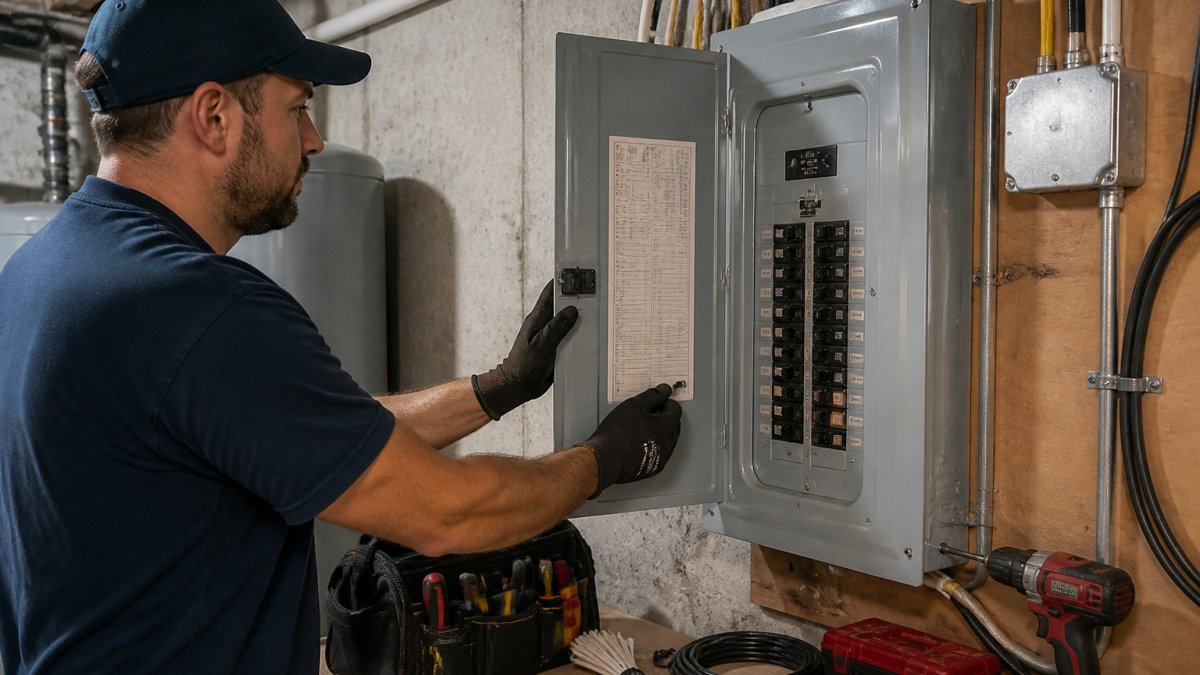
Breaker markings also help. Stab-Lok breakers typically carry the Federal Pacific name on the handle or face. Because breakers can be swapped over the years, a panel label is the more reliable clue.
Checking the Panel Label and Breaker Markings
- Open the panel door carefully to view the label, without touching the breakers or wiring, since turning off the main breaker does not make the interior safe to touch
- Look for the manufacturer name on the label inside the door or on the panel body
- Check the breaker handles for “Federal Pacific” or “Stab-Lok” markings
- Note the panel age, since these panels were installed mainly from the 1950s through the 1980s
Do not remove panel covers or work inside the panel yourself. Contact a licensed electrician if you are unsure what you are looking at.
What Federal Pacific Breaker Failure Looks Like
Breaker failure can be hard to spot because a panel can look completely normal, with no visible damage, while its breakers still fail to trip correctly. A visual inspection alone cannot confirm that breakers will work when they are needed. To learn which warning signs point to a panel that needs upgrading, see the signs you need a panel upgrade.
Warning signs worth watching for include:
- Warm or discolored panel covers or breaker faces
- A burning smell near the panel
- Lights that dim when large appliances start
- Outlets or switches that feel warm to the touch
If you notice any of these, turn off power to the affected area if you can do so safely, and call a licensed electrician right away.
What the Safety Testing Evidence Does and Does Not Show
Most of what homeowners hear about Federal Pacific Stab-Lok panels traces back to a small number of sources, and those sources are not all equal in quality. Understanding where the claims come from helps you weigh them without either dismissing the risk or treating every number you see online as settled fact.
Where the concerns originate
- In-service failures reported by electricians. Working electricians have long reported Stab-Lok breakers that stayed closed under overload or failed to reset. These are anecdotal but consistent across decades and regions.
- Laboratory testing from the late 1970s and early 1980s. Testing commissioned during that period found elevated rates of breakers failing to trip under simulated overload and short-circuit conditions compared with other designs. These tests are frequently cited but were conducted on samples, not on every panel ever built.
- Consumer complaints and industry reporting. Trade publications and consumer advocates amplified the findings, which is how the panels became widely known as a concern.
What the evidence does not tell you
- It does not give a reliable failure rate for your panel. The widely repeated fire, death, and property-damage figures are estimates assembled from complaints and incident reports, not from a controlled study of installed panels. Treat those numbers as directional, not precise.
- It does not predict how a specific breaker will behave. A breaker that has never tripped under load may still fail tomorrow, and one that has tripped correctly may continue to do so. A panel can also look completely normal on a visual inspection, with no visible damage, corrosion or discoloration, while its breakers still fail to trip correctly inside. Visual inspection alone cannot establish breaker reliability.
- It does not account for condition. Corrosion, loose connections, previous DIY work, and heat damage all affect performance independently of the original design.
- It does not distinguish between panel generations. Federal Pacific made panels over several decades, and not every model or production run shares the same reputation.
The honest summary: the concern is real and well documented at the design and testing level, but the scary statistics you see repeated are estimates, not measurements of your home. That is why a professional inspection of your specific panel matters more than any general number.
If you want a plain-English read on what an electrician can and cannot confirm about your panel, consumer product safety guidance is a reasonable starting point for general context, but it will not substitute for an on-site evaluation.
What to Do Right After You Identify a Panel
Confirming you have a Federal Pacific panel is not a five-alarm emergency by itself, but it does call for a clear sequence of steps. The right path depends on whether you are seeing warning signs or simply discovered the panel during a routine check. Keep in mind that a panel can look and smell completely normal while its breakers still fail to trip correctly, so a visual inspection alone cannot confirm the breakers are reliable.
Step 1: Decide whether this is urgent
Treat it as urgent and call a licensed electrician today if you notice any of the following:
- A burning or hot-plastic smell near the panel
- Discolored, scorched, or warm-to-the-touch panel covers or breaker faces
- Breakers that will not reset, feel loose, or trip repeatedly
- Buzzing, crackling, or arcing sounds from the panel
If any of these are present, do not add loads, do not open the panel, and do not attempt repairs yourself. If you smell burning or see smoke, leave the area and call 911 first.
Step 2: If there are no warning signs, stabilize and schedule
When the panel shows none of these warning signs, that does not mean the breakers are reliable, only that there is no immediate fire-hazard emergency. A normal appearance and smell cannot confirm the breakers will trip correctly, so you still have time to plan a full evaluation rather than reacting to a crisis:
- Stop adding new circuits or heavy loads to the panel until it has been evaluated. That includes new EV chargers, hot tubs, shop equipment, or large appliances. If you are planning an EV Charger Installation, hold off until the panel has been assessed, since a new dedicated circuit adds load to a panel that may already be marginal.
- Do not swap breakers yourself. Mismatched or salvaged breakers can create a new hazard on top of an existing one.
- Do not remove the panel cover. The cover protects you from energized bus bars and lugs that can remain live even when the main breaker is switched off. Turning off the main breaker does not make the panel interior safe to access.
- Start a simple log. Note any tripping, warm outlets, flickering lights, or odd smells with dates. This gives your electrician real evidence instead of a vague description.
Step 3: Book an evaluation and know what to ask
When you call, tell the electrician up front that you have a Federal Pacific Stab-Lok panel and whether you have seen any warning signs. Ask specifically:
- Whether they will inspect the panel interior and torque connections
- What they can and cannot determine from a visual inspection
- Whether they recommend replacement, further evaluation, or monitoring
- What permit and inspection steps your town requires if replacement is the path
Step 4: Check your insurance and disclosure picture early
Some insurers ask about panel brand during underwriting or renewal. Requirements vary by carrier and policy, so confirm directly with your insurer rather than assuming. If you are planning to sell, ask your real estate professional what disclosure obligations apply in your situation.
The most useful thing you can do before the electrician arrives is write down what you have observed and when. A short log of tripping events, warm spots, and smells is far more valuable to a diagnosis than a general memory of “it seems fine.”
CNE Electrical can evaluate your panel, explain what the inspection found, and walk you through whether repair, monitoring, or replacement makes sense for your home. schedule a panel assessment to get started.
The right next step depends on whether you are seeing warning signs or simply found the panel during a routine check. A panel can look normal with no visible damage and still have breakers that fail to trip correctly, so a visual inspection alone cannot confirm the breakers are reliable. The article’s guidance is summarized below.
| Situation | Action | Timing |
|---|---|---|
| Burning smell, scorched covers, or arcing sounds | Call 911 if smoke is present, then call an electrician | Today |
| Breakers that will not reset, feel loose, or trip repeatedly | Call a licensed electrician | Today |
| No warning signs found | Stop adding new or heavy loads | Until evaluated |
| No warning signs found | Keep a log of trips, warm spots, and odd smells | Ongoing |
| No warning signs found | Take photos of the label and breakers from a safe distance | Before the electrician visits |
| Panel evaluation | Ask about torque checks, limits of visual inspection, and replacement | At booking |
Electrical Panel Inspection: Scope, Limits, and What to Expect
A licensed electrician’s panel inspection typically checks the panel condition, breaker labels, wire connections, grounding, and the overall load on the system. To understand inspection costs and what inspectors check before you book, read the residential electrical safety inspection cost guide.
An inspection has limits. A panel can look normal, with no visible damage, corrosion or burn marks, and its breakers can still fail to trip when they should. Visual inspection alone cannot confirm that a breaker will work correctly, and some problems are only visible when the system is under load.
Planning a Federal Pacific Panel Replacement With a Licensed Electrician
Replacement is the most common long-term solution for a Federal Pacific panel. You can see how a licensed panel replacement was handled in a recent Danvers panel upgrade. If the panel also needs to support a new Generac Standby Generator Installation or a larger electrical load, an Electrical Service Upgrade may be part of the conversation.
When planning a replacement, ask your electrician about:
- Panel capacity and whether it matches your current and future electrical needs
- Permit and inspection requirements in your town
- Whether any wiring or grounding issues need attention at the same time
- How long the work will take and whether power will be off
CNE Electrical can assess your existing panel and give you a site-specific estimate. Contact us to schedule a site assessment and learn what replacement would involve for your home.
Frequently Asked Questions
Are Federal Pacific Electric panels recalled?
Federal Pacific Electric panels and Stab-Lok breakers have not been subject to a formal government recall notice. Concerns about them come from independent testing and reported failures, including breakers that did not trip under overload conditions. Because there is no recall notice to check, homeowners should rely on identification of their own panel and a licensed electrician’s inspection to determine whether replacement is warranted. Check your panel’s brand label and breaker markings rather than assuming a recall would have reached you.
Can a Federal Pacific breaker fail to trip?
Yes. Testing of Stab-Lok breakers reported that some units did not trip when overloaded, which means the breaker may fail to cut power during an overcurrent condition. That failure mode is the core reason the panels are viewed as a safety concern, and it is not something a visual inspection can rule out: a panel can show no signs of damage and still contain breakers that fail to trip. The evidence on how often this happens in homes in service is limited and uncertain. A licensed electrician can evaluate your specific panel and breakers, but a breaker that has never tripped is not proof that it will protect your home.
Do Federal Pacific panels need to be replaced?
Many electricians recommend replacing Federal Pacific panels, but the decision depends on the panel’s condition, the breakers installed, the load on the system, and your tolerance for risk. A replacement is often the most direct way to remove the breaker concern. Some homeowners choose to monitor the panel and reduce load while planning a replacement. Discuss your options with a licensed electrician who can inspect the panel in person and explain the trade-offs for your home.
How much does it cost to replace a Federal Pacific electrical panel?
Replacement cost depends on the number of circuits, the service size, the condition of the wiring, permit requirements, and the amount of work needed at the utility connection. Because every home differs, there is no single figure that applies to all projects. Your best next step is a site-specific estimate from a licensed electrician who can assess the panel and the surrounding system. CNE Electrical provides site assessments and estimates for panel and service upgrades, so you can get a site-specific estimate based on your actual home.
