
Table of Contents
- What Does an Electrical Inspection Include
- Factors That Affect Residential Electrical Safety Inspection Cost
- How Long Does an Electrical Inspection Take
- Electrical Inspection for Home Purchase
- Electrical Safety Inspection Checklist and Preparation
- What Happens After Your Inspection
- Frequently Asked Questions
Last Updated: October 21, 2026
What Does an Electrical Inspection Include
Understanding the electrical safety inspection cost starts with knowing what a residential electrical safety inspection includes, a thorough evaluation of your home’s electrical system to identify hazards, code violations, and potential failures. A licensed electrician examines components such as the panel, wiring, outlets, switches, and grounding to check for safety and proper function. The exact scope depends on the property, access to those components, the service requested, and the work agreed with you.
Most homeowners don’t realize that electrical systems degrade over time. Connections loosen. Insulation cracks. Circuits get overloaded as we add more devices. An inspection documents what’s working, what needs attention, and what could fail if left alone.
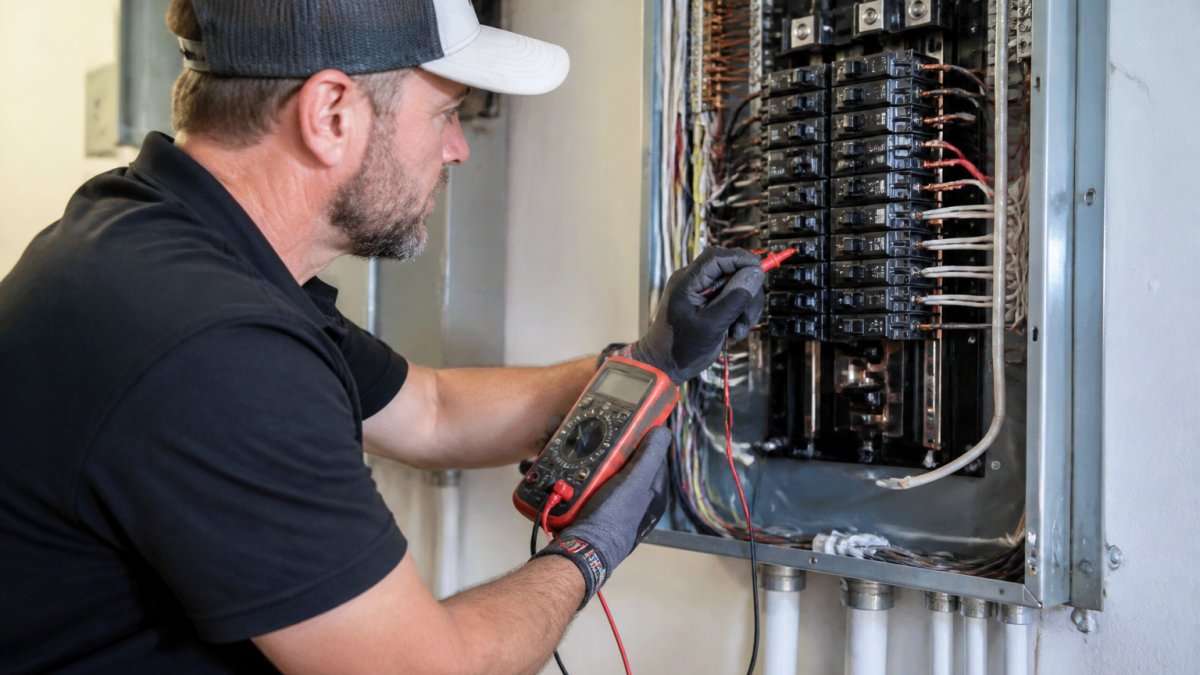
Electrical Panel and Breaker Inspection
The electrical panel is the heart of your home’s system. During an inspection, the electrician opens the panel door and examines each breaker, the main disconnect, and the connections feeding power into your home. They check for signs of overheating, corrosion, loose connections, and improper installation. Old panel types, like Federal Pacific or Zinsco panels, get flagged because they have known safety issues.
Breakers are inspected for signs of wear, damage, or improper operation. Breakers showing signs of damage, overheating, or improper operation may require further evaluation or replacement. A visual inspection alone cannot confirm that a breaker will trip correctly under fault conditions. The electrician also verifies that the panel is properly bonded to ground and that the main breaker is correctly rated for your service entrance.
Wiring and Visible Electrical Concerns
Visible wiring is inspected for damage, improper routing, and code violations. The electrician looks for aluminum wiring in older homes (which has higher fire risk), damaged insulation, wires run through walls without protection, and improper splicing. They check whether wiring is the correct gauge for the circuit it’s protecting and whether it’s properly secured.
Attics, basements, and crawlspaces get particular attention because that’s where shortcuts often hide. Wiring stapled too tightly, run across sharp edges, or exposed to moisture all create hazards that compound over years.
Outlets, Switches, and Grounding Checks
Outlets and switches included in the inspection scope are tested. The electrician uses specialized equipment to verify that outlets are properly grounded, that polarity is correct, and that they’re wired to the right circuits. Ground fault circuit interrupter (GFCI) outlets in bathrooms and kitchens are checked to confirm they trip as designed. Arc fault circuit interrupter (AFCI) breakers are reviewed as part of the panel inspection, though trip-testing every individual breaker is not part of a standard inspection.
The electrician also verifies that your home has proper grounding to earth. This is critical for safety, it’s the path that diverts dangerous current away from you if something fails.
Factors That Affect Residential Electrical Safety Inspection Cost
Inspection pricing is not a single number, and the quotes you see online rarely compare like for like. What’s included depends on the property, access, the service you’ve requested, and the scope agreed with your electrician: a low advertised figure often covers a quick visual walkthrough, while a higher figure may include opening the panel, checking GFCI and AFCI devices, checking grounding and bonding, and producing a written report. Understanding what drives the number helps you compare estimates fairly and avoid surprises.
What Actually Drives the Price
- Time on site. Inspection time varies by property, and it is the biggest cost driver. Larger homes, older wiring, and multiple panels add time.
- Number of panels and subpanels. A home with a main panel plus a garage subpanel or a detached-structure panel takes longer than a single-panel home.
- Home age and wiring type. Knob-and-tube, cloth-insulated, or aluminum branch wiring requires more careful evaluation and documentation than modern Romex.
- Access conditions. Finished basements, sealed crawlspaces, or panels blocked by stored items slow the work and may require a return visit.
- Scope and reporting. A verbal walkthrough costs less than a written report with photos and prioritized findings.
- Local labor rates and permitting. Labor rates vary by market, and some jurisdictions require a permit or inspection fee for certain electrical work discovered during the inspection.
Inspection Types and What Each Typically Includes
| Inspection type | Typical scope | What it usually excludes |
|---|---|---|
| Basic safety check | Panel, main disconnect, visible wiring, outlets, switches, GFCI/AFCI test, grounding and bonding verification | Opening walls, tracing hidden circuits, load calculations |
| Older-home inspection | Everything in basic, plus closer evaluation of legacy wiring, panel type (e.g., Federal Pacific, Zinsco), and service capacity | Destructive access, full circuit tracing |
| Pre-purchase inspection | Everything in older-home, plus adequacy for modern loads and a written report suitable for negotiation | Repairs, permits, remediation |
| Upgrade-readiness inspection | Panel capacity, service size, load calculation for EV charger or standby generator planning | Installation, utility coordination |
Scope Exclusions to Ask About
A quoted price is only meaningful if you know what it leaves out. Common exclusions include:
- Opening walls or ceilings to inspect concealed wiring
- Removing panel dead-fronts on panels with known hazards or no safe access
- Tracing individual circuits end to end
- Load calculations for future upgrades (sometimes billed separately)
- Repair work, permits, and follow-up visits
Ask the electrician before booking whether the quote includes a written report, photos, and a prioritized findings list, those items change the value of the price even when the headline number looks similar.
Why Regional and Date Variation Matters
Published price ranges online mix markets and dates, so a figure from one region or an older article may not reflect your local market. Advertised introductory prices are often loss-leaders for a minimal walkthrough. The most reliable approach is to request a site-specific estimate that states scope, exclusions, and report format in writing. CNE Electrical provides site assessments so the estimate reflects your home’s actual panel, wiring, and access conditions rather than a generic range.
When comparing quotes, line up scope, report format, and exclusions side by side, not just the headline number. Two quotes that differ by a wide margin usually differ in scope, not in fairness.
How Long Does an Electrical Inspection Take
How long an inspection takes varies based on the size, age, and complexity of your home, as well as the scope of the service you’ve requested. A smaller, straightforward home may take less time to inspect than a larger or older one with more to check.
The electrician needs time to examine the panel carefully, test the circuits and outlets included in the inspection, check grounding, inspect visible wiring, and document findings. Rushing this work defeats the purpose. A thorough inspection can’t be hurried.
After the inspection, allow time for a walkthrough discussion. The electrician will explain findings, show you any concerns, and answer questions. This conversation is valuable, it helps you understand your system and prioritize any recommended repairs.
Electrical Inspection for Home Purchase
A pre-purchase electrical inspection is one of the smartest investments a buyer can make. It reveals whether the home’s electrical system is safe and capable of supporting your needs.
During a pre-purchase inspection, the electrician evaluates whether the system is adequate for modern living. Does it have enough capacity for your appliances and devices? Can it support future upgrades? Are there any code violations or safety hazards? The report becomes part of your due diligence.
Many buyers use the inspection results to negotiate repairs or credits with the seller. A seller who discovers issues before listing can address them proactively, which often leads to a smoother transaction.
Electrical Safety Inspection Checklist and Preparation
Preparing for an inspection helps the electrician work efficiently and focus on what matters most for your home. Here’s what to expect and how to prepare:
- Clear access to the electrical panel. Remove items stored in front of it. The electrician needs safe, unobstructed access.
- Provide access to attics, basements, and crawlspaces. This is where hidden wiring and potential hazards live.
- List any electrical concerns. If you’ve noticed flickering lights, tripped breakers, warm outlets, or buzzing sounds, mention them. These clues help the electrician prioritize what to investigate.
- Know your home’s age and history. If you know when the panel was installed or if major electrical work was done, share that information.
- Have the utility meter accessible. The electrician may need to see it as part of the evaluation.
- Ensure someone is home during the inspection. The electrician will need to ask questions and show you findings.
The inspection report should document the findings from your inspection clearly, covering what’s in good condition, what needs attention, and any safety concerns identified within the scope of work performed. A written report gives you something to reference and share with contractors if repairs are needed.
What Happens After Your Inspection
An inspection fee pays for information, not repairs. The report tells you what is safe, what needs monitoring, and what needs correction, but the cost to fix findings is separate and depends on what is found. Understanding that distinction up front prevents sticker shock and helps you plan.
How Findings Are Prioritized
A useful report sorts findings into three buckets:
- Immediate safety hazards. Improper grounding, damaged or overheating wiring, or a panel with known failure modes (such as Federal Pacific or Zinsco). Breakers showing signs of damage, overheating, or improper operation may require further evaluation or replacement. A visual inspection alone cannot confirm that a breaker will trip correctly under fault conditions. These warrant prompt correction.
- Code and function issues. Missing GFCI protection in kitchens and baths, ungrounded outlets, overloaded circuits, or improper splicing. These are typically addressed on a planned timeline.
- Deferred maintenance and upgrades. Older outlets, aging fixtures, or capacity limits that matter for future projects but are not urgent.
Prioritization matters because it lets you sequence work and budget rather than treating every line item as equally urgent.
Repair Costs and What Triggers a Permit
Repair pricing depends on the finding, access, and parts. A single GFCI replacement is a small job; replacing a panel or correcting aluminum branch wiring is a larger project with its own permit and inspection requirements. In many jurisdictions, panel replacements, service upgrades, and new circuits require a permit and a follow-up inspection by the local authority, costs that are separate from the original inspection fee. Ask the electrician to separate inspection cost, repair cost, and permit cost in any follow-up quote so you can see what each covers.
When a Follow-Up Quote Is Needed
Some findings can be quoted on the spot; others need a return visit, load calculation, or utility coordination. Examples that typically require a follow-up quote include panel upgrades, service changes, EV charger installation, and standby generator planning. A follow-up quote should state scope, permit responsibility, and timeline.
Planning an Upgrade
If you are considering a standby generator or EV charger, the inspection report is the starting point, not the answer. Generator sizing depends on calculated electrical loads, starting requirements, fuel supply, and load management, not square footage alone, and a panel upgrade is not automatically required. The report helps a licensed electrician determine what the next step is, whether that is a load calculation, a service evaluation, or utility coordination. CNE Electrical can review inspection findings and provide a site-specific estimate for any recommended repairs or upgrades, including Generac Standby Generator Installation or EV charging infrastructure.
Inspection fee ≠ repair cost. Ask for findings sorted by priority, and request that any follow-up quote separate inspection, repair, and permit costs.
Frequently Asked Questions
How much does a residential electrical safety inspection cost?
Inspection costs depend on home size, age, inspection type, and location. A licensed electrician will assess your property to provide an accurate estimate based on your specific situation. Contact CNE Electrical for a site-specific quote that reflects your home’s unique electrical system and needs.
What is included in a home electrical safety inspection?
The scope of a home electrical inspection depends on the property, access, and the service requested. A typical inspection may cover the electrical panel, visible wiring, outlets and switches, and grounding systems that are part of the agreed scope. Not every breaker is individually trip tested, and concealed wiring or circuits outside the agreed scope are not inspected unless specifically included. The inspector checks for visible safety hazards and code violations and provides a report with findings and recommended repairs if issues are identified.
How long does a residential electrical inspection take?
Inspection time varies depending on home size, age, system complexity, and the scope of service requested. Older homes or those with extensive wiring may require more time. A licensed electrician will give you a time estimate during scheduling so you can plan accordingly.
Do I need an electrical inspection before buying a home?
A pre-purchase electrical inspection identifies hidden hazards and code violations before you commit to buying. This is especially important for older homes, which may have outdated wiring or panels. Many buyers include an electrical inspection in their due diligence to avoid costly repairs after closing.
What electrical problems can an inspection uncover?
Inspections identify outdated panels, faulty wiring, grounding issues, overloaded circuits, missing ground fault circuit interrupter (GFCI) outlets, and other safety hazards. These findings help prevent electrical fires, shocks, and damage to appliances. A detailed report guides you on which repairs are urgent versus optional upgrades.
How often should a home have an electrical safety inspection?
Recommended inspection frequency depends on your home’s age, condition, and electrical history, and a licensed electrician can advise on a suitable schedule. Homes with frequent electrical issues, older panels, or significant additions should be inspected more often.