
Table of Contents
- Electrical Emergency? What to Do and How to Schedule Repairs
- Step 1: Confirm It Is a True Emergency
- Step 2: Make the Call and Share the Right Details
- What Qualifies as an Electrical Emergency
- Electrical Emergency Safety Checklist: What to Do Before Help Arrives
- Scheduling Electrical Troubleshooting and Repairs: What to Expect
- Questions to Ask an Electrician Before You Book
- What Affects the Cost of Emergency Electrical Repair
- When to Call 911 Instead of Booking an Electrician
- Conclusion
- Frequently Asked Questions
Last Updated: October 16, 2026
Electrical Emergency? What to Do and How to Schedule Repairs
Knowing what to do during an electrical emergency and how to schedule repair service before you need it is the difference between a stressful night and a safe, well-handled fix.
The single most important rule: if you see fire, smoke, sparking, or a downed power line, get everyone to safety and call 911 or your utility company right away. Do not wait to schedule an appointment with CNE Electrical. For everything short of an active hazard, the steps below will help you decide what to do next and how to schedule a repair.
A true electrical emergency involves an immediate safety risk: burning smells, sparking, smoke, hot outlets, or a total power loss with no obvious cause. A single dead outlet or a tripped breaker that resets cleanly usually is not.
Step 1: Confirm It Is a True Emergency
A true electrical emergency is any situation with an active safety risk, not just an inconvenience. Before you call, run a quick check.
Signs that point to a genuine electrical emergency:
- A burning smell near outlets, switches, or the breaker panel
- Visible sparks, scorch marks, or melted plastic on an outlet or cord
- Smoke of any kind coming from an electrical device or wall
- An outlet or switch plate that is hot to the touch
- Buzzing, crackling, or popping sounds from the panel
- Partial power loss where some rooms work and others do not
If none of those apply, you likely have a standard repair that can be scheduled as a normal appointment during business hours. For anything involving an active safety risk, such as fire, smoke, sparking, or a downed power line, contact 911 or your utility company right away instead of waiting for a scheduled repair.
Step 2: Make the Call and Share the Right Details
Not every electrical problem calls for the same response. If you are facing an active hazard, such as a fire, sparks, smoke, or a downed power line, contact 911 or your utility company immediately rather than waiting for an electrician. For issues that need professional repair but are not an active emergency, CNE Electrical schedules troubleshooting and repair appointments during normal business hours.
Here is the full booking path, start to finish:
1. Choose the right channel.
- Active hazard (burning smell, sparks, smoke, a hot outlet, repeated breaker trips): contact 911 or your utility company right away. These are signs of an active hazard, do not wait for an electrician appointment.
- Urgent but not dangerous (one dead circuit, a tripping GFCI that will not reset, a non-working outlet): a phone call during business hours or an online request both work.
- Routine (adding an outlet, swapping a fixture, a quote on a panel upgrade): online booking or a scheduled call is fine and usually gets you a better arrival window.
2. Have this information ready before you call. Our scheduling team moves faster when they are not waiting on details:
- Full service address, plus the nearest cross street or landmark
- A one-sentence description of what you see, smell, or hear
- When it started and whether it is getting worse
- Whether anyone is injured and whether 911 has been called
- Your panel type and location, if you know it
- Whether you have already shut off the affected breaker
3. Confirm the appointment on the call. Before you hang up, get four things in writing, by text or email if the company offers it:
- The arrival window (not a single time; windows account for traffic and the call ahead of you)
- Whether you will get a call or text when the technician is en route
- The name of the person you spoke with and any ticket or reference number
- Whether a diagnostic or service-call fee applies and whether it is credited toward the repair
4. Know what happens next. Our team schedules a qualified technician for your appointment, and they may call ahead with a follow-up question, panel brand, meter access, driveway clearance. Answering speeds things up.
5. Reschedule or cancel cleanly if needed. If the hazard resolves, the utility restores power, the breaker holds, call back and cancel rather than letting the technician arrive to a non-issue.
If you are ever unsure whether a situation is dangerous, treat it as one: contact 911 or your utility company first. For anything that is not an active hazard, call during business hours and describe what you are seeing so it can be scheduled appropriately.
What Qualifies as an Electrical Emergency
An electrical emergency is a fault or failure that poses an immediate risk of fire, shock, or injury, or that leaves a home without power in a way that creates a safety or health hazard.
Situations that qualify:
- Burning smell, smoke, or visible scorching at any electrical component
- Sparking outlets, switches, or cords
- A breaker panel that is hot, buzzing, or repeatedly tripping
- Downed or damaged service lines on your property
- Water contact with outlets, panels, or wiring
- A full power outage where neighbors still have power and your main breaker is on
Situations that usually do not qualify:
- One dead outlet in an otherwise normal home
- A tripped breaker that resets and holds
- Flickering lights on a single fixture
- A light switch that feels loose but works
When you are unsure, call and describe what you see. A reputable electrician will tell you honestly whether it can wait for a standard appointment.
Electrical Emergency Safety Checklist: What to Do Before Help Arrives
Safety before the electrician arrives comes down to three things: cut power where you safely can, keep people away from the hazard, and do not touch anything hot, wet, or sparking.
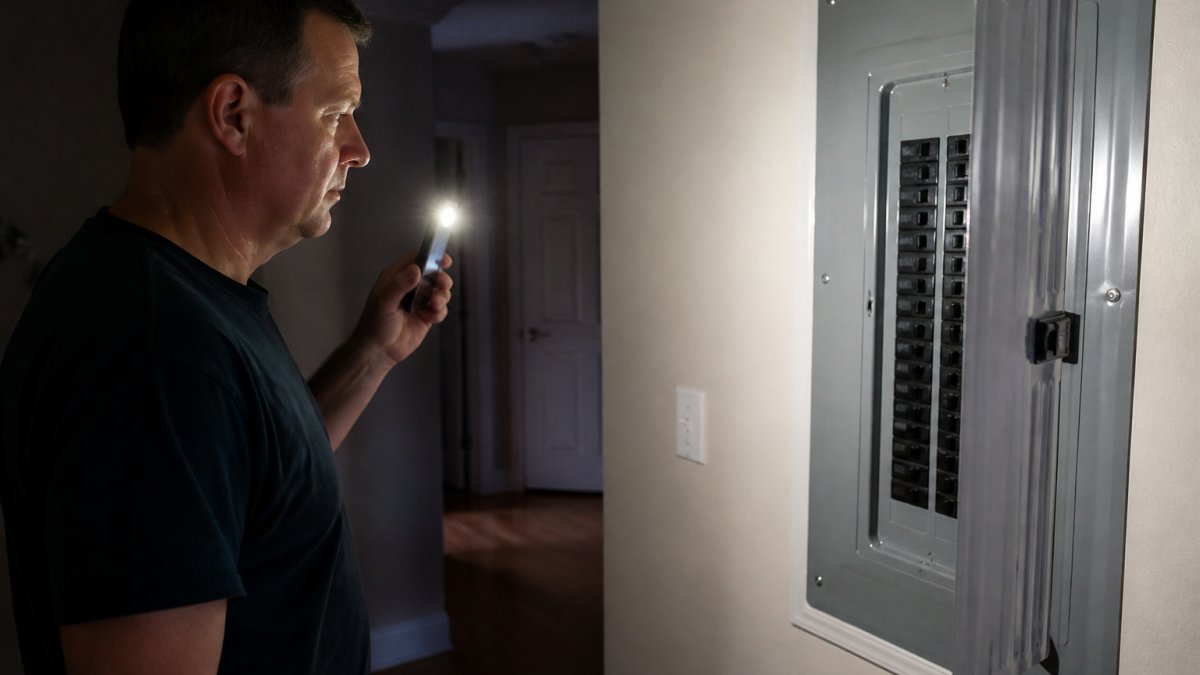
Work through this list while you wait:
- Move everyone, including pets, away from the affected area
- If safe to reach, shut off the affected circuit at the breaker panel
- If you see smoke or fire, leave the home and call 911
- Do not touch a sparking or hot outlet, switch, or appliance
- Do not pour water on anything electrical
- Keep the area clear so the electrician can work on arrival
Never reset a breaker that has tripped multiple times. It is doing its job by cutting power to a fault, and forcing it back on can turn a repair into a fire.
Scheduling Electrical Troubleshooting and Repairs: What to Expect
CNE Electrical schedules electrical troubleshooting and repairs by appointment during normal business hours. How soon you can be seen depends on your location within the service area and how full the schedule already is for that day.
A few things affect scheduling:
- Your location within the service area
- Whether the issue is a straightforward repair or needs more diagnostic time
- Weather events that increase the number of calls on a given day
- Whether parts or a specific panel type are needed
- Current appointment availability
When you book, ask three questions: What is the appointment window? Will you call or text before the appointment to confirm? Is there a diagnostic fee, and does it apply to the repair? Getting those answers up front avoids surprises.
If your power is out but your neighbors have power, check your main breaker and any outdoor disconnect first. That single check often reveals a tripped main rather than a utility outage, which changes who you call.
Questions to Ask an Electrician Before You Book
Ask about licensing, insurance, fees, and warranty before you confirm the appointment, not after. A few minutes of questions protects you from hiring the wrong person in a hurry.
Run through this list on the call:
- Are you licensed and insured, and can you provide the license number?
- Is there a service call or diagnostic fee, and what does it cover?
- Is the fee applied to the repair if I move forward?
- Do you carry the parts needed for common repairs, or will you need to return?
- What is your warranty on the repair?
- Will you provide a written estimate before starting work?
A licensed electrician will answer these without hesitation. If a provider dodges the licensing question, call someone else. You can verify a contractor’s license through your state’s consumer affairs or licensing board before the technician arrives.
What Affects the Cost of Emergency Electrical Repair
Emergency electrical work is priced in layers, and understanding them helps you read an estimate without sticker shock.
The layers, in the order they usually appear on a bill:
- Service call or trip charge. A flat fee for sending a technician to your address, covering the drive and the first portion of on-site time.
- Diagnostic fee. Charged for finding the fault, tracing a circuit, opening a panel, testing a device. Many companies credit this toward the repair if you approve the work; ask whether yours does.
- Labor for the repair. Billed hourly or as a flat job rate, depending on the company and scope.
- Parts and materials. Breakers, GFCI or AFCI devices, outlets, switches, wire, and connectors. A common breaker is inexpensive; a specialty or obsolete panel breaker can be hard to source and cost more.
- Permit and inspection fees. Some repairs, panel work, service changes, certain new circuits, require a permit from the local building department, separate from labor.
How the quote gets approved. The standard sequence is: diagnose first, then quote, then get your approval in writing before work begins.
Be wary of any provider who quotes a firm all-in price over the phone for an electrical emergency, or who asks for full payment up front before diagnosing. A legitimate emergency electrician diagnoses first, quotes second, and gets your approval before starting.
When to Call 911 Instead of Booking an Electrician
Call 911 first when there is fire, smoke, an active shock hazard, or anyone injured. An electrician cannot make a burning building safe; that is the fire department’s job.
Call 911 immediately if you see:
- Flames or heavy smoke from any electrical component
- Someone who has been shocked and is unresponsive or injured
- A downed power line touching a person, vehicle, or structure
- A burning smell with visible smoke and no way to isolate the circuit
Once the fire department has made the scene safe, call an electrician to diagnose and repair the cause.
For non-emergency outages, remember that your utility owns the lines up to your meter. If your neighbors are also dark, call the utility first.
Never backfeed a portable generator into a household outlet or dryer receptacle. It can energize lines the utility is working on and put linemen at risk. Standby systems use a proper transfer switch for exactly this reason.
Conclusion
Electrical emergencies rarely announce themselves politely, and the homeowners who handle them best already know the steps: confirm it is a real hazard, call a live line, share clear details, and keep everyone safe until help arrives.
As a Generac Authorized Dealer with licensed electricians, we handle emergency repairs alongside standby generator installation, EV charger installation, and electrical service upgrades. If you are weighing backup power so the next outage does not catch you off guard, we can walk through your options during a site assessment.
CNE Electrical provides professional electrical troubleshooting and repairs by appointment during normal business hours. Contact us to discuss your electrical concern and schedule service. For immediate danger, contact emergency services or your utility provider as appropriate.
Frequently Asked Questions
What information should I provide when scheduling an electrical repair?
Have your address, phone number, and a clear description of the problem ready. Note what you saw or smelled (sparks, burning odor, flickering lights), which rooms or outlets are affected, and whether the breaker tripped or reset. If anyone is injured or you see smoke or fire, contact 911 or your utility provider immediately rather than waiting for a scheduled visit. This helps us schedule the right technician with the correct parts and tools.
Should I turn off the power during an electrical emergency?
If it is safe to reach your breaker panel without touching water or damaged wiring, shut off the main breaker. Never stand in water or touch a sparking outlet or smoking panel. If the panel is hot, sparking, or you smell burning, leave it alone and get everyone outside. Call 911 if you see flames or smoke, then call a licensed electrician once the immediate danger is handled.
How soon can I schedule an electrical repair appointment?
CNE Electrical schedules troubleshooting and repairs by appointment during normal business hours. When you contact us, we will discuss your concern and find the next available appointment time. If you are facing an active hazard such as fire, smoke, sparking, or a downed power line, contact 911 or your utility provider immediately rather than waiting for a scheduled visit.
How do I verify an emergency electrician is licensed and insured?
Ask for the license number and verify it through your state’s licensing board website. Request a certificate of insurance showing general liability and workers’ compensation coverage. A reputable company will provide these without hesitation. Also confirm the technician who arrives is the same licensed professional you spoke with, not an unlicensed subcontractor. This protects you if something goes wrong during the repair.