
Table of Contents
- Why Flickering Lights Happen: Start With the Simple Checks
- LED Lights Flickering: Why Modern Bulbs Aren’t Immune
- Lights Flicker When an Appliance Turns On: What It Means
- How to Fix a Flickering Light: A Step-by-Step Checklist
- When to Call an Electrician for Flickering Lights
- Flickering Lights and Your Home’s Electrical System in 2026
- Frequently Asked Questions
Last Updated: October 12, 2026
Why Flickering Lights Happen: Start With the Simple Checks
Flickering lights are one of the most common electrical complaints homeowners call about, and in most cases the cause is simple. At CNE Electrical, we find that a surprising share of flickering lights trace back to a loose bulb or a worn socket, not a failing electrical system. Before you assume the worst, start with the easy checks. The fix often takes five minutes and no tools.
Two quick definitions help here. A flicker is a rapid, repeated change in brightness. A blink or dimming event is a single, brief drop or surge that happens once.
If your lights flicker constantly, the problem is usually at the fixture. If they flicker only when something else turns on, the problem is usually in the circuit or the panel.
Loose Bulbs and Fixture Connections
A bulb that isn’t screwed in tight makes poor contact with the socket. That contact breaks and reconnects, and the light flickers. This is the first thing to check.
Turn off the switch, let the bulb cool, and tighten it by hand. Don’t force it. If the bulb still flickers after tightening, the socket itself may be worn. A worn socket needs a new fixture or a repair.
Other simple culprits include:
- A bulb that’s the wrong wattage for the fixture
- A dimmer switch that isn’t rated for the bulb type
- A loose wire at the fixture terminals: this needs a qualified electrician to diagnose and repair, since loose connections can also cause overheating
- A fixture that’s physically loose on the ceiling or wall: have an electrician check this too
Old or Mismatched Bulbs
Bulbs don’t last forever, and old ones can flicker as they near the end of their life. A bulb with a loose base or a cracked filament will flicker before it fails completely.
Mismatched bulbs cause problems too. If you mix LED and incandescent bulbs on the same dimmer, they often flicker because they draw power differently. Keep bulbs consistent within a fixture and match them to the dimmer’s rating.
Check the dimmer’s box or manual for a list of compatible bulbs. Many LED flicker problems disappear once you use a bulb the dimmer was tested with. This is the single most overlooked fix we see.
LED Lights Flickering: Why Modern Bulbs Aren’t Immune
LED lights flickering is one of the most common calls we get, and it surprises homeowners who assumed LEDs would last forever without issues. LEDs are sensitive to voltage and to the drivers inside them. A small change in power that an incandescent bulb would ignore can make an LED flicker.
Common causes of LED flicker include:
- A dimmer that isn’t compatible with LED bulbs
- A driver inside the bulb that’s failing
- Voltage changes on the circuit
- A loose connection at the fixture or switch
If one LED flickers and others on the same circuit don’t, the bulb is the likely problem. Swap it with a known-good bulb from another room. If the flicker follows the bulb, replace the bulb. If it stays with the fixture, the issue may be in the wiring or the dimmer. Loose or damaged wiring should be diagnosed and repaired by a licensed electrician, not as a DIY step.
For more on how we handle fixture and circuit issues across the North Shore, see our electrical service upgrades page.
Lights Flicker When an Appliance Turns On: What It Means
Lights that flicker when an appliance turns on point to a different problem. When a large appliance starts, it draws a surge of current. That surge can briefly drop the voltage on the circuit, and the lights dim or flicker.
Small, brief dimming when a big appliance starts is often normal in older homes. But frequent or strong flickering is a sign worth checking. Appliances that commonly cause this include:
- Air conditioners and heat pumps
- Refrigerators and freezers
- Washing machines and dryers
- Well pumps and sump pumps
- Space heaters and microwaves
If the flicker is mild and only happens at startup, it may be nothing to worry about. If it happens every time, gets worse, or affects lights across the whole house, have an electrician look at it promptly. Flickering across multiple rooms, especially with unexpected brightening and dimming, can point to a problem with the neutral or service connection, which needs prompt professional attention. In some cases the problem is on the utility side, and you may need to contact your electric utility directly.
According to U.S. Fire Administration electrical safety guidance, electrical distribution systems are a leading cause of home fires, and loose or worn wiring is a frequent factor. That’s why we treat repeated flickering as a signal, not a nuisance.
How to Fix a Flickering Light: A Step-by-Step Checklist
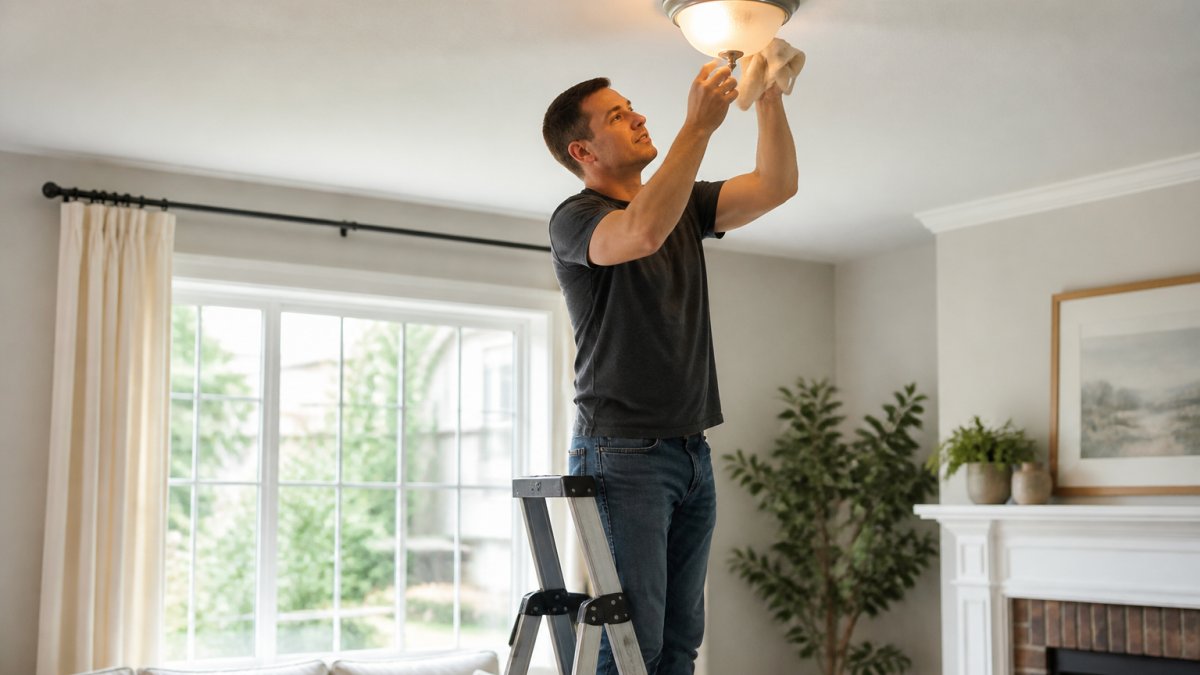
Most flickering light fixes follow the same order. Work from the simplest cause to the most complex, and stop when the flicker goes away.
- Turn off the switch. Let the bulb cool before you touch it.
- Tighten the bulb. Hand-tight is enough. Don’t overtighten.
- Swap the bulb. Move a known-good, compatible bulb into the fixture.
- Check the dimmer. Confirm it’s rated for your bulb type.
- Note when it happens. Does it flicker alone or with an appliance?
- Call a licensed electrician if the flicker persists.
That’s the safe homeowner path. Loose electrical connections can also cause flickering and overheating, but diagnosing and repairing a connection issue requires a qualified electrician, not a DIY step. Opening a fixture, switch, outlet, or panel to inspect or tighten wiring goes beyond homeowner work and belongs to a licensed electrician.
Watch for burning odors, buzzing, visible scorching, smoke, or unusual heat. If you notice any of these, stay away from the affected equipment and get professional or emergency help right away. Never open a panel or pull a breaker with the main power on. A panel holds live conductors even when a breaker is off. The risk is shock and arc flash, and the consequence can be fatal.
When to Call an Electrician for Flickering Lights
Call an electrician for flickering lights when the simple fixes don’t work or when the pattern points to a system problem. Some signs mean “call today.”
Contact a licensed electrician if you notice:
- Lights flicker across multiple rooms at once
- Flickering gets worse over time
- You smell burning or see scorch marks
- A breaker trips or feels warm
- Lights flicker with no appliance running
- You hear buzzing or crackling at a switch or outlet
These signs can point to a loose connection, an overloaded circuit, or a failing panel. Loose connections can cause flickering and overheating, but diagnosing and repairing them requires a qualified electrician, not a DIY fix. A loose neutral, for example, can cause lights to brighten and dim unpredictably across multiple rooms, and it needs prompt professional attention. In some cases the problem starts on the utility side of your connection, which means contacting your electric utility. If you notice burning smells, buzzing, visible scorching, smoke, or unusual heat, stay away from the affected equipment and get professional or emergency help right away.
If you’re in North Reading, Tewksbury, Reading, Lynnfield, Beverly, Danvers, Peabody, Andover, or Middleton, our team can assess the issue at your panel and fixtures. We’re a licensed electrical contractor and a Generac Authorized Dealer, so we handle both everyday electrical repairs and larger upgrades. The U.S. Department of Energy also offers guidance on home electrical safety and efficiency if you want to learn more.
Flickering Lights and Your Home’s Electrical System in 2026
Flickering lights in 2026 often reflect a home’s growing electrical load. Homes now run more electronics, EV chargers, heat pumps, and home offices than they did a decade ago. An older panel or service may struggle to keep up.
If your lights flicker and your home has added big loads recently, the issue may be capacity, not a single bad bulb. A service upgrade or panel replacement can restore steady power. That’s where a site assessment matters, because the right fix depends on your actual load, not a guess.
For EV owners, a Level 2 charger adds a continuous load that can affect the whole system. We explain how we handle that on our EV charger installation page. A proper assessment tells you whether your panel can support the charger or needs an upgrade first.
| What You Notice | Likely Cause | What to Do |
|---|---|---|
| One fixture flickers | Loose or old bulb | Tighten or replace the bulb |
| LED flickers on a dimmer | Dimmer not LED-rated | Replace the bulb, or have an electrician install an LED-compatible dimmer |
| Flicker when appliance starts | Voltage dip on the circuit | Note the pattern, call if it worsens |
| Whole-house flicker | Loose neutral or panel issue | Call a licensed electrician |
| Flicker plus burning smell | Overheating connection | Stay away and call an electrician right away |
Flickering confined to one fixture is usually a bulb or socket. Flickering across the whole house is a system issue and needs a licensed electrician. The pattern tells you which one you’re dealing with.
Flickering lights are easy to ignore until they aren’t. The pattern matters: one fixture points to a bulb, while whole-house flicker points to your panel or service. If your lights flicker and the simple checks don’t fix it, don’t wait it out. CNE Electrical offers licensed electrical service, Generac standby generator installation, and EV charger installation across the North Shore, backed by a team that treats your home’s safety as the priority. Get a fast quote today and let us find the cause before it becomes a bigger problem.
Frequently Asked Questions
Why are my lights flickering in my house?
Flickering lights usually trace back to one of a few causes: a loose bulb, a failing dimmer switch, a loose neutral wire, or a large appliance cycling on and drawing power. Start by tightening the bulb and testing it in another fixture. If the flicker continues across multiple rooms, the problem is likely in your wiring or panel and needs a licensed electrician to diagnose.
Why do LED lights flicker when they are turned on?
LED lights flickering often happens because LEDs are sensitive to voltage changes and need compatible dimmers and drivers. A standard dimmer built for incandescent bulbs may not work with LED fixtures, causing a flicker at startup or low brightness. Swapping to a higher-quality LED bulb can resolve simple cases. If the dimmer itself is the problem, have an electrician install an LED-compatible model.
Can a loose bulb cause a light to flicker?
Yes. A bulb that isn’t fully seated in its socket creates an intermittent connection, which shows up as flickering or buzzing. Turn off the power at the switch, let the bulb cool, and tighten it gently. If the socket itself feels loose or shows scorch marks, stop using the fixture and have an electrician inspect it before you reinstall the bulb.
Why do my lights flicker when an appliance starts?
When a large appliance like a refrigerator, air conditioner, or furnace kicks on, it draws a sudden surge of current. That brief voltage drop can make lights flicker for a second. Occasional dimming on startup is common, but if the flicker is frequent, lasts longer than a moment, or affects several rooms, it can point to an overloaded circuit or a loose connection at the panel that warrants professional testing.