
Last Updated: October 23, 2026
Quick Summary
To test standby generator performance, follow your owner’s manual for the recommended exercise frequency and duration, since these vary by make and model. During an exercise run the generator starts and idles under no load, letting you confirm it starts reliably and that your transfer switch moves power between utility and generator as expected. A load test runs the generator under your home’s electrical demand to prove it can handle real power needs during an outage; transfer switch testing and load testing should be performed by a qualified technician.
- An exercise test runs the generator at no load; a load test proves it can handle real electrical demand under stress
- Most manufacturers recommend a 10 to 30-minute exercise run every month; check your manual for the exact recommendation
- A healthy generator battery reads 12.6 volts or higher at rest; most generator batteries last 3 to 5 years
- Record test results monthly including run time, load level, voltage, frequency, and any issues to track trends and prove maintenance
Table of Contents
- Why Testing Your Standby Generator Matters
- Understanding the Standby Generator Exercise Cycle
- How to Test a Generator Transfer Switch
- Performing a Standby Generator Load Test
- Standby Generator Maintenance Checklist
- Testing Your Generator Safely
- What to Do When a Test Fails
- Keeping Testing Records and Logs
- Frequently Asked Questions
Why Testing Your Standby Generator Matters
A standby generator sitting unused for months is a gamble, which is why you need to test standby generator performance regularly. When an outage hits, you need to know your backup will start and run reliably.
Too many homeowners discover their generator won’t start during a real outage. Regular testing catches problems early, when you can fix them without panic.
Testing serves two purposes: it confirms your generator starts and runs under its own power, and it verifies your transfer switch moves power from the utility to your generator and back smoothly. Both must work when the grid fails.
Set a testing schedule now and stick to it. Check your owner’s manual for the recommended exercise frequency and duration, and keep a record each time you test.
Understanding the Standby Generator Exercise Cycle
An exercise run is the simplest way to test standby generator function. Your generator starts, runs at no load for a set time, then shuts down, exercising the engine, fuel system, and battery without electrical demand.
Like a car that sits all winter, a generator needs periodic starts to stay healthy.
Frequency and Duration
Most manufacturers recommend a 10 to 30-minute exercise run every month; check your manual for the exact recommendation. Some units have built-in exercise modes that run automatically.
Monthly testing keeps fuel fresh in the carburetor and injectors and keeps the battery charged. Skipping runs for six months or longer invites problems.
What Happens During an Exercise Run
When you start your generator for a test, the battery cranks the engine, fuel flows to the combustion chamber, the engine fires and reaches operating speed, the alternator generates electricity, and the engine shuts down after the set time. No electrical load is connected, so your home stays on utility power while the generator proves it can start and idle smoothly.
An exercise run proves your generator’s basic function. It does NOT prove the transfer switch works or that your generator can handle real electrical demand.
How to Test a Generator Transfer Switch
Your transfer switch is the critical link between utility and generator power. It must sense a utility failure, signal the generator to start, switch your home’s power over, and switch back when utility power returns.
Testing the transfer switch is more complex than an exercise run: you’re verifying that it senses, signals, and transfers power correctly.
Automatic Transfer Switch Testing
An automatic transfer switch (ATS) monitors utility voltage constantly.
To test an automatic transfer switch safely:
- Run your monthly exercise test first to confirm the generator starts
- Contact your utility company before testing (some utilities require advance notice)
- Perform the test during daylight hours when you can monitor everything
Many ATS units have a test mode. Check your manual. Some allow you to manually command a transfer without actually losing utility power.
If your ATS does not have a test mode, contact a licensed electrician.
Manual Transfer Switch Testing
A manual transfer switch requires you to turn a handle to switch power from utility to generator. It’s simpler but demands more from you during an outage.
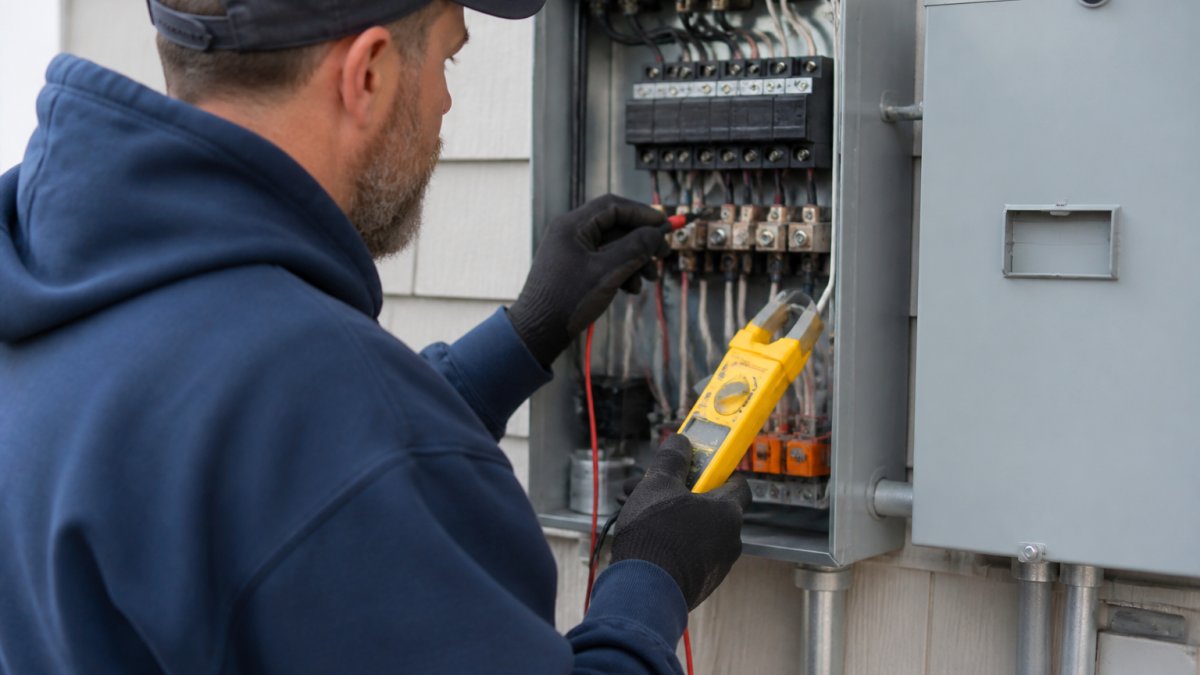
Transfer switch testing should be performed by a qualified technician. Between visits, you can perform a few manufacturer-approved checks:
- Check that the switch enclosure is free of corrosion, moisture, or visible damage
- Confirm any indicator lights or status displays show normal operation
- Note any unusual sounds, smells, or warning signs and report them to your technician
A qualified technician will confirm the switch transfers smoothly and check for issues such as a stiff handle or flickering lights. If you notice anything like this between inspections, contact a licensed electrician.
Do not attempt to operate the transfer switch yourself. Switching while the generator is starting or stopping, before it reaches stable speed, can damage the switch or create a shock hazard. Transfer switch testing should be performed by a qualified technician.
Performing a Standby Generator Load Test
An exercise run proves your generator starts; a load test proves it can handle real electrical demand. That’s the most important test for peace of mind.
Exercise Test vs. Load Test: Key Differences
An exercise test runs the generator at no load, so the engine idles smoothly but produces no useful power. A load test runs the generator while it supplies your home, so the engine works harder and voltage and frequency must stay stable under stress.
Many problems only appear under load:
- Weak alternators produce low voltage
- Worn fuel injectors cause rough running
- Battery issues prevent smooth starting
A load test reveals these failures. An exercise test alone does not.
Safe Load Testing Steps
Load testing requires care, so it should be performed by a qualified technician. Here’s what the process typically involves:
Step 1: Prepare Your Generator
Run an exercise test first. Make sure the generator starts and idles smoothly.
Step 2: Start the Generator
Step 3: Engage the Transfer Switch
Step 4: Apply Electrical Load Gradually
The technician turns on circuits one at a time.
Circuits are never turned on all at once.
Step 5: Run Under Load for the Manufacturer-Recommended Duration
How long the generator should run under load varies by make and model, so follow the duration in the manufacturer’s manual to detect most problems.
Step 6: Monitor and Record
Note run time, load level, voltage, frequency, and any issues. A log tracks trends and proves maintenance.
Step 7: Return to Utility Power
Record your test results after each test. A log shows whether your generator is running reliably or developing problems. Follow your generator’s manufacturer manual for the recommended testing schedule, and keep in mind many manufacturers require maintenance records for warranty coverage.
Standby Generator Maintenance Checklist
Regular maintenance keeps your generator reliable, and testing is only part of it.
Pre-Test Inspections
Before you test, inspect your generator:
- Visual check: Look for cracks, corrosion, loose bolts, or damaged wiring
- Fuel level: Fill the tank if needed
- Oil level: Check the dipstick and top off if low
These checks take 10 minutes and prevent most common failures.
Battery and Starting System Checks
A weak battery is the most common reason generators fail to start, so check it monthly.
Check the battery monthly:
- Visual inspection: Look for corrosion on terminals or cracks in the case
- Clean terminals: Corrosion prevents good electrical contact
- Voltage test: A healthy battery reads 12.6 volts or higher at rest
If your battery is more than five years old or fails any test, replace it. A failed battery during an outage leaves you without backup power.
Testing Your Generator Safely
Many homeowners worry that testing will disrupt the household or damage appliances. A transfer switch can exercise the generator with minimal disruption, though an actual transfer briefly interrupts power. Transfer switch testing and any load testing should be performed by a qualified electrician or generator technician, not by the homeowner.
As the homeowner, you can perform these checks yourself without operating the transfer switch:
Review your transfer switch’s indicator panel and documentation for the following:
- Indicator lights show the switch is in the correct position for utility or standby power
- No error codes or warning lights are displayed on the switch panel
- The date of the last professional inspection or test, noted in your service records
Do not press test buttons, operate, or open the transfer switch yourself.
Contact a licensed electrician or generator technician to test the transfer switch and perform any load test. They have the tools and training to do this safely.
Never intentionally trip your main breaker to simulate an outage. This creates safety risks and can damage equipment.
What to Do When a Test Fails
A failed test is good news: you found the problem before a real outage, not during one.
Generator will not start:
- Check fuel level. Add fuel if needed.
- Check battery voltage. Replace the battery if it’s weak.
- Check the fuel shutoff valve. Make sure it’s open.
Generator starts but runs rough:
- Check the oil level. Low oil causes rough running.
- Inspect the air filter. A clogged filter starves the engine of air.
- Check fuel quality. Old or contaminated fuel causes rough running.
Transfer switch does not transfer:
- Verify the generator is running at full speed before attempting transfer.
- Check that the switch is in the correct position.
- Look for visible damage, corrosion, or loose wiring on the switch.
Voltage or frequency is unstable:
- Reduce the electrical load. Too much load causes voltage to sag.
- Check the generator’s fuel supply. A clogged fuel filter starves the engine.
- Verify the generator is running at full speed.
Generator stops unexpectedly:
- Check the oil level. Most generators have a low-oil shutoff.
- Verify fuel is available and the shutoff valve is open.
- Check for any error codes or alarm lights on the generator.
If your generator fails a test and you cannot identify the cause, stop testing and contact a licensed electrician or generator service specialist. Continuing to test a failing generator risks equipment damage or safety hazards.
Keeping Testing Records and Logs
A testing log proves maintenance is happening and tracks trends. If your generator starts harder each month, the log shows it, a warning sign.
Keep a simple log with these details:
- Date: When you performed the test
- Generator run time: How long the generator ran
- Load level: Light, moderate, or heavy
Store the log with your generator manual. Some homeowners photograph the gauges during testing and save the images.
Your manufacturer may require maintenance records for warranty coverage. A detailed log proves you’re maintaining the unit properly.
Testing your standby generator regularly turns it from a risky unknown into a reliable backup. Follow your manufacturer’s recommended exercise schedule to catch most problems early, and perform load tests at the interval your manual specifies to confirm it can handle real demand when you need it most.
CNE Electrical helps homeowners across the North Shore keep their generators running reliably. If your testing reveals problems you cannot solve, or if you want professional guidance on your testing program, contact CNE Electrical for a site assessment. If you’re also considering upgrades to support future needs, such as electrical service upgrades for additional capacity or EV charger installation, we can assess your entire electrical system during the visit.
Frequently Asked Questions
How long should a standby generator run during an exercise cycle?
Exercise cycle duration and frequency vary by generator make and model, so check your owner’s manual for the manufacturer’s recommended schedule. The cycle should run long enough to warm the engine, cycle fuel through the system, and verify that the automatic transfer switch responds correctly. Running too briefly may not clear carbon buildup, and running longer than your manual specifies without a load serves no additional benefit.
How do you test a standby generator without causing a power outage?
Testing without an outage mainly comes down to the checks you can safely do yourself: confirm the generator starts, reaches full speed, and runs smoothly, and watch for its status lights or indicators showing normal operation. Operating or testing the transfer switch involves energized equipment, so that work, along with any load testing, should be left to a qualified technician or electrician rather than done by the homeowner. If you notice anything unusual, such as visible damage, corrosion, or loose wiring near the switch, contact a licensed electrician before relying on the system.
What is the difference between an exercise test and a load test for a standby generator?
An exercise test runs the generator at idle with no electrical load, confirming the engine starts and maintains steady operation; check your manual for the recommended frequency and duration for your model. A load test runs the generator while it supplies electrical current to actual home circuits or a load-bank device, checking voltage, frequency, and performance under realistic conditions. Load tests are more thorough and should be performed at the interval your generator’s manual recommends. Because load testing involves energized circuits, it should be performed by a qualified technician.
How often should you test a home standby generator?
Follow your generator’s manual for the recommended exercise schedule, since this varies by make and model. Have a full load test performed by a qualified technician at the interval your manual recommends to verify performance under electrical demand. If your generator has been idle for an extended period, have it tested before relying on it for backup power. Keep a maintenance log documenting each test date, runtime, any alarms or issues, and fuel level. This record helps your electrician spot patterns and ensures your generator stays reliable when you need it most.
